Netty解析七:快速的FastThreadLocal
从DefaultThreadFactory到FastThreadLocalThread再到FastThreadLocalRunnable的解析过程中可以发现这些类的作用都是在为FastThreadLocal作处理。
所以本篇开始解析FastThreadLocal,FastThreadLocal是ThreadLocal的高性能实现。
FastThreadLocal总结
为了便于阅读将总结放到具体解析之前。
ThreadLocal
jdk的ThreadLocal实现底层使用的是数组来实现map,一个线程一个map(数组),不同ThreadLocal对象不同的threadLocalHashCode值;hash算法是序号对table取余【key.threadLocalHashCode & (table.length - 1)】,使用线性探测法来处理hash冲突。这就存在一个问题当hash冲突时,查询数据就需要遍历数组去查找,时间复杂度为O(n)。
FastThreadLocal
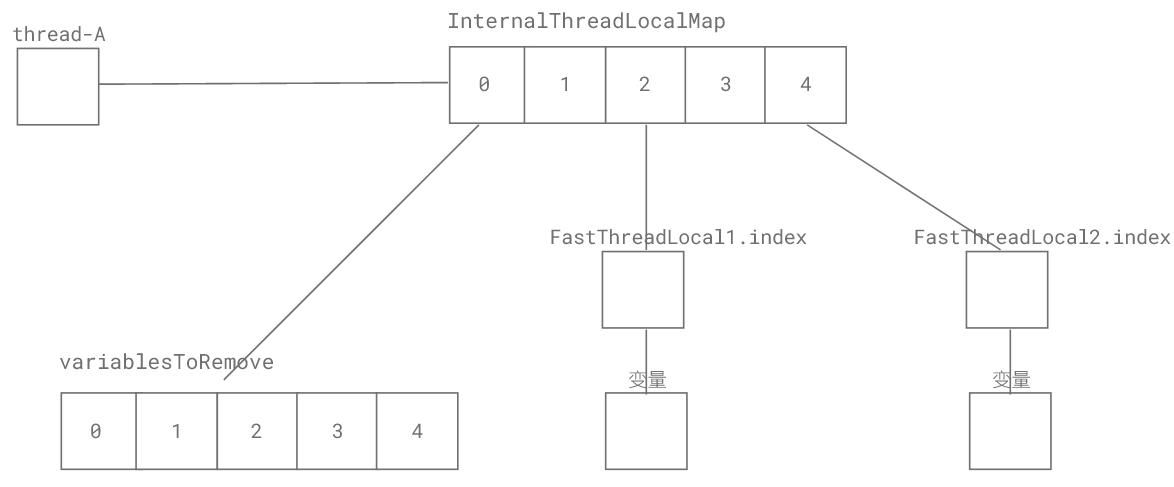
Netty的FastThreadLocal底层也是使用数组来实现map,一个线程一个map(数组),不同FastThreadLocal对象不同的索引值;直接根据唯一索引index进行定位数据,保证时间复杂度为O(1)。
下标是通过原子类nextIndex递增的,如果数组的下标很大数组也会很大,整体来说是以空间换时间。
FastThreadLocal没有使用弱引用,依赖于FastThreadLocalThread->FastThreadLocalRunnable,在FastThreadLocalRunnable的run方法中执行FastThreadLocal.removeAll来统一清理数据,所以没有内存泄漏的问题。
解析
InternalThreadLocalMap
FastThreadLocal中完全依赖于InternalThreadLocalMap来实现ThreadLocal功能,所以要解析FastThreadLocal需要先解析InternalThreadLocalMap。
继承关系
InternalThreadLocalMap继承了UnpaddedInternalThreadLocalMap,UnpaddedInternalThreadLocalMap抽取了大部分的成员变量没有任何方法的实现。1
public final class InternalThreadLocalMap extends UnpaddedInternalThreadLocalMap {}
UnpaddedInternalThreadLocalMap抽取了成员变量,没有任何方法实现。
1 | class UnpaddedInternalThreadLocalMap { |
成员变量
1 | // 默认数组长度 |
核心方法
get方法
InternalThreadLocalMap的get是返回当前线程的InternalThreadLocalMap1
2
3
4
5
6
7
8
9
10public static InternalThreadLocalMap get() {
Thread thread = Thread.currentThread();
// 如果线程类是FastThreadLocalThread,则使用FastThreadLocalThread
if (thread instanceof FastThreadLocalThread) {
return fastGet((FastThreadLocalThread) thread);
} else {
// slow是使用jdk的ThreadLocal
return slowGet();
}
}
fastGet
从FastThreadLocalThread中取出InternalThreadLocalMap
1 | private static InternalThreadLocalMap fastGet(FastThreadLocalThread thread) { |
slowGet
从UnpaddedInternalThreadLocalMap的ThreadLocal中取出InternalThreadLocalMap
1 | private static InternalThreadLocalMap slowGet() { |
remove方法
FastThreadLocalThread则设置thread的ThreadLocalMap为null,不然执行ThreadLocal(UnpaddedInternalThreadLocalMap.slowThreadLocalMap)的remove方法。1
2
3
4
5
6
7
8public static void remove() {
Thread thread = Thread.currentThread();
if (thread instanceof FastThreadLocalThread) {
((FastThreadLocalThread) thread).setThreadLocalMap(null);
} else {
slowThreadLocalMap.remove();
}
}
destroy方法
执行slowThreadLocalMap的remove方法。1
2
3public static void destroy() {
slowThreadLocalMap.remove();
}
下一个变量序号nextVariableIndex
通过原子类对象nextIndex递增生成下一个序号。1
2
3
4
5
6
7
8public static int nextVariableIndex() {
int index = nextIndex.getAndIncrement();
if (index < 0) { // 溢出
nextIndex.decrementAndGet();
throw new IllegalStateException("too many thread-local indexed variables");
}
return index;
}
上一个变量序号lastVariableIndex
1 | public static int lastVariableIndex() { |
初始化变量数组newIndexedVariableTable
在InternalThreadLocalMap构造器中会执行newIndexedVariableTable方法初始化,用于初始化UnpaddedInternalThreadLocalMap的indexedVariables属性。1
2
3
4
5private static Object[] newIndexedVariableTable() {
Object[] array = new Object[32];
Arrays.fill(array, UNSET);
return array;
}
获取变量indexedVariable
根据变量序号从indexedVariables数组中获取变量。
1 | public Object indexedVariable(int index) { |
设置变量setIndexedVariable
在index处设置变量,如果该位置是第一次赋值则返回true,不然返回false1
2
3
4
5
6
7
8
9
10
11
12public boolean setIndexedVariable(int index, Object value) {
Object[] lookup = indexedVariables;
if (index < lookup.length) {
Object oldValue = lookup[index];
lookup[index] = value;
return oldValue == UNSET;
} else {
// 扩容
expandIndexedVariableTableAndSet(index, value);
return true;
}
}
扩容并赋值expandIndexedVariableTableAndSet
位运算扩容到下一个2幂次的数,例如:2 扩容到 4, 3 扩容到 4,4扩容到81
2
3
4
5
6
7
8
9
10
11
12
13
14
15
16private void expandIndexedVariableTableAndSet(int index, Object value) {
Object[] oldArray = indexedVariables;
final int oldCapacity = oldArray.length;
int newCapacity = index;
newCapacity |= newCapacity >>> 1;
newCapacity |= newCapacity >>> 2;
newCapacity |= newCapacity >>> 4;
newCapacity |= newCapacity >>> 8;
newCapacity |= newCapacity >>> 16;
newCapacity ++;
Object[] newArray = Arrays.copyOf(oldArray, newCapacity);
Arrays.fill(newArray, oldCapacity, newArray.length, UNSET);
newArray[index] = value;
indexedVariables = newArray;
}
移除序号上的元素removeIndexedVariable
1 | public Object removeIndexedVariable(int index) { |
序号上是否设置元素isIndexedVariableSet
如果该序号设置了元素则返回true,不然返回false。1
2
3
4public boolean isIndexedVariableSet(int index) {
Object[] lookup = indexedVariables;
return index < lookup.length && lookup[index] != UNSET;
}
设置清除标记setCleanerFlag
在cleanerFlags上设置清除标记1
2
3
4
5
6public void setCleanerFlag(int index) {
if (cleanerFlags == null) {
cleanerFlags = new BitSet();
}
cleanerFlags.set(index);
}
当前序号是否设置清除标记isCleanerFlagSet
1 | public boolean isCleanerFlagSet(int index) { |
构造器
InternalThreadLocalMap的构造器是私有的,只能通过静态的get方法或者getIfSet方法获取。1
2
3private InternalThreadLocalMap() {
super(newIndexedVariableTable());
}
FastThreadLocal
解析过InternalThreadLocalMap后再解析FastThreadLocal就会异常轻松。
类定义
1 | public class FastThreadLocal<V> {} |
成员变量
- variablesToRemoveIndex:移除set所在的索引,这个与index变量一样指向InternalThreadLocalMap.indexedVariables;移除集合用于记录同一个线程中所有使用的FastThreadLocal对象;variablesToRemoveIndex的值为0;
- index:InternalThreadLocalMap中变量数组的索引,这个位置用于存储这个线程的变量(ThreadLocal.set)。
1 | private static final int variablesToRemoveIndex = InternalThreadLocalMap.nextVariableIndex(); |
构造器
在构造器中会通过InternalThreadLocalMap的nextVariableIndex生成索引。
1 | public FastThreadLocal() { |
核心方法
FastThreadLocal方法的实现都依赖于InternalThreadLocalMap,这里选择一些典型的方法做解析。
addToVariablesToRemove方法
将InternalThreadLocalMap加入到移除集合中;
【移除集合】与FastThreadLocal.set保存的变量一样保存在InternalThreadLocalMap.indexedVariables中,区别就是索引【序号】不一样。
1 | private static void addToVariablesToRemove(InternalThreadLocalMap threadLocalMap, FastThreadLocal<?> variable) { |
set方法
- 通过InternalThreadLocalMap获取当前线程的InternalThreadLocalMap;
- 通过index向InternalThreadLocalMap的变量数组中存入value
- 当前InternalThreadLocalMap加入移除set中。
1 | public final void set(V value) { |
get方法
通过构造器中生成的索引从InternalThreadLocalMap.indexedVariables数组中获取对象。
1 | public final V get() { |
initialize方法
- 执行初始化方法initialValue()赋值变量v,当前实现为null;
- 将变量v保存到InternalThreadLocalMap.indexedVariables数组index索引处;
- 当前InternalThreadLocalMap加入移除set中。
1 | private V initialize(InternalThreadLocalMap threadLocalMap) { |
移除所有变量removeAll
一个线程只有一个InternalThreadLocalMap对象,一个FastThreadLocal可以有多个InternalThreadLocalMap(不同线程),一个线程可以有多个FastThreadLocal对象。
removeAll()方法会在FastThreadLocalRunnable执行runnable后执行.1
2
3
4
5
6
7public void run() {
try {
runnable.run();
} finally {
FastThreadLocal.removeAll();
}
}
removeAll用于清理执行产生的数据。这些数据与当前线程绑定,所以要删除当前线程的InternalThreadLocalMap对象和多个FastThreadLocal中存储的变量。
1 | public static void removeAll() { |
移除remove
1 | public final void remove(InternalThreadLocalMap threadLocalMap) { |
}`